2FF, 3FF, 4FF, MFF2 oder iSIM: Formfaktor
June 4, 2026 · 6 min read · Technical Whitepapers
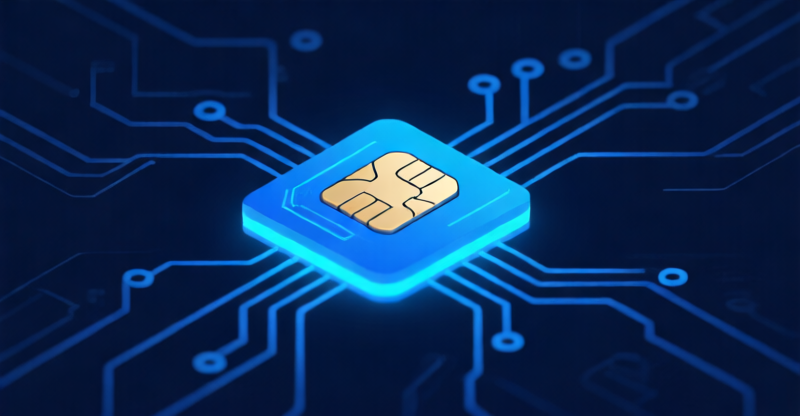
Herausnehmbar = Mikroabrieb. MFF2 = 10 Jahre. iSIM = SoC-gebunden.
A 2FF SIM is the size of a credit card. A 4FF is the size of a fingernail. An MFF2 is a 6×5mm chip soldered to a PCB. An iSIM does not exist as a separate component — it is logic inside the modem SoC. Each step down in size removes a failure mode and adds a constraint. The removable SIM can be swapped in 30 seconds when a carrier contract changes. The soldered MFF2 requires OTA profile switching or a soldering iron. The iSIM cannot be changed at all — if the SoC vendor's carrier partnerships don't include your target MNO, you spec a different SoC or a different form factor.
The Five Form Factors — What You Actually Get
| Form Factor | Size | Type | Temperature Range | Best For | Worst For |
|---|---|---|---|---|---|
| ------------- | ------ | ------ | ------------------ | ---------- | ----------- |
| 2FF (Mini) | 25×15mm | Removable | -40°C to +105°C (industrial) | Legacy M2M, retrofit | New designs (too large) |
| 3FF (Micro) | 15×12mm | Removable | -40°C to +105°C (industrial) | Handheld IoT, routers | Vibration-prone |
| 4FF (Nano) | 12.3×8.8mm | Removable | -40°C to +105°C (industrial) | Consumer IoT, fleet trackers | Extreme vibration |
| MFF2 | 6×5mm | Soldered | -40°C to +105°C (industrial) | Industrial, automotive, smart meters | Carrier-locked without eUICC |
| iSIM | 0mm² (SoC-integrated) | Integrated | SoC-dependent | NB-IoT sensors, wearables | Carrier flexibility constrained by SoC |
The industrial temperature range (-40°C to +105°C) is not automatic. Consumer-grade SIMs are typically rated 0°C to +60°C or -25°C to +85°C. Specifying "industrial" on the procurement document is a separate line item from the form factor — do not assume MFF2 means industrial-grade.
Source: Kigen, "What is FF (Form Factor)?", 2025. Available at https://kigen.com/glossary/ff-form-factor/
Source: Pelion, "SIM Form Factors in IoT: Types, Benefits & Challenges", 2025. Available at https://pelion.com/knowledge-base/sim-form-factors
Removable vs Soldered — The Failure Mode Comparison
A removable SIM card has two failure modes that soldered SIMs eliminate: contact micro-abrasion (vibration causes the SIM contacts to rub against the tray pins, eventually creating intermittent open circuits) and moisture ingress (the SIM slot is an unsealed opening in the device enclosure — IP67 rating is voided by the slot itself). In a compressor, a conveyor motor, or a vehicle engine compartment, a removable SIM is a planned failure point.
A soldered MFF2 eliminates both failure modes. No moving contacts. No slot to seal. But it adds a different constraint: carrier changes require OTA profile switching via eUICC. If the MFF2 is not eUICC-capable, the carrier is fixed at manufacturing. Procurement must verify: "MFF2 with eUICC (SGP.32)" — not just "MFF2."
An iSIM eliminates the SIM component entirely. The SIM function runs as secure software inside the modem SoC — Qualcomm Snapdragon X series, Sony Altair, Nordic nRF9160 with integrated SIM. Power consumption drops approximately 70% versus a discrete eSIM because there is no separate chip to power. BOM cost drops. PCB space frees up for a larger battery or additional sensors. But carrier profile availability is constrained by the SoC vendor's GSMA certification scope — not all MNOs support iSIM profiles on all SoCs. Verify before committing.
Source: Cybersecurity News, "Choosing the Right IoT SIM Card for Smart Industry and Automation", 2025. Available at https://cybersecuritynews.com/choosing-the-right-iot-sim-card-for-smart-industry-and-automation/
Procurement Checklist — What to Specify
When writing an RFP for IoT SIMs, specify all four dimensions independently. They are often conflated by vendors:
1. Form factor: 2FF / 3FF / 4FF / MFF2 / iSIM — physical package
2. eUICC capability: Yes (SGP.32) / No — remote provisioning support
3. Temperature grade: Industrial (-40°C to +105°C) / Extended / Consumer
4. Multi-IMSI: Yes / No — multiple operator profiles on one card
These four dimensions are orthogonal. A 4FF can be industrial-grade with eUICC. An MFF2 can be consumer-grade without eUICC. An iSIM can be eUICC-capable but limited to 3 carrier profiles. Specify all four. Accept no substitution without written confirmation.
Source: Simplex Wireless, "How to Choose the Right SIM & Cellular Strategy for Reliable IoT", October 2025. Available at https://www.simplexwireless.com/2025/10/13/how-to-choose-the-right-sim-cellular-strategy-for-reliable-iot/