IoT-SIM-Tests: Wie Sie eine SIM vor dem Einsatz von 10.000 Einheiten qualifizieren
· 7 min read · Technical Whitepapers
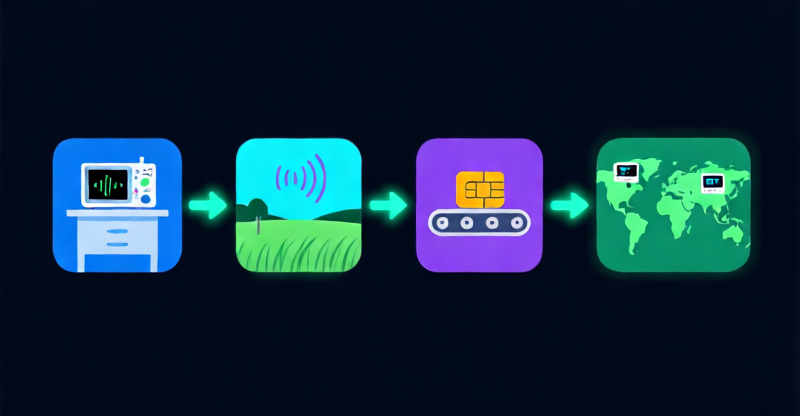
Eine SIM, die Labortests auf einer Referenzplatine besteht, fallt im Feld zu 30-60% durch. Ein strukturierter Qualifikationsprozess — Laborprufstand, Feldpilot, Chargenabnahme — erkennt diese Ausfalle, bevor sie zu Vor-Ort-Einsatzen werden.
Der Standard-Qualifikationsprozess in den meisten Unternehmen: 5 Test-SIMs bestellen, eine in ein Entwicklungsboard stecken, Anmeldung bestatigen, abzeichnen. Ausfallrate im Feld: 30-60%. Der Grund: Der Prozess hat nie die Bedingungen getestet, die tatsachlich Ausfalle verursachen.
Phase 1: Laborprufstand — 3 Tage, 10 Tests
Test 1: Basis-Anmeldung — SIM einlegen, einschalten, IMSI- und GPRS-Anmeldung <10s. Test 2: PDP-Kontext — IP-Zuweisung, DNS-Auflosung, 1-KB-Ping. Test 3: APN-Fehlerbehandlung — absichtlich falscher APN, SM-Ursachencode #33. Test 4: SIM-Entfernung und Wiedereinlegen. Test 5: Netzabweisungssimulation.
Phase 2: Multi-Netz und Multi-IMSI — 2 Tage
20 SIMs aus der Produktionscharge bestellen. An 5-10 Standorten mit mindestens 3 Betreibern testen. RSRP, RSRQ, Anmeldezeit und Durchsatz messen. Multi-IMSI: IMSI-Wechsel erzwingen und tatsachliche Schaltzeit messen.
Phase 3: Chargenabnahme — 1 Tag pro Charge
Stichprobe nach IEC 2859-1 Level II. Bei 10.000 SIMs: 200 Stuck. ICCID, IMSI-Bereiche, Applet-Version und Basis-Anmeldung prufen. Kosten: ~EUR 500-1.000.
Phase 4: Pilot — 60-90 Tage, 20-50 Gerate
Produktionsgerate an realen Standorten einsetzen. 90 Tage via CMP uberwachen. 50 Gerate, 90 Tage, null Anomalien = starkstes Signal.
Häufig gestellte Fragen
How long should an IoT SIM pilot deployment run?
60-90 days minimum. The first 30 days catch configuration errors (wrong APN, wrong IMSI, activation failures). The second 30-60 days catch environmental degradation — antenna corrosion, SIM contact oxidation, firmware memory leaks, and carrier network changes. A 90-day pilot with zero anomalies across 50 devices is the gold standard for production sign-off.
What sample size for SIM batch acceptance testing?
IEC 2859-1 General Inspection Level II. For a 10,000 SIM batch: 200 SIMs. Verify ICCID matches manifest, IMSI ranges correct, applet version matches approved firmware, and basic attach succeeds. Cost: roughly EUR 500-1,000. Cost of skipping this step: EUR 50-150 per device in rework if a personalization error is found after assembly.
Why do SIMs that pass lab tests fail in the field?
Lab tests use reference boards with optimal antennas in controlled RF environments. Field failures are caused by: antenna mismatch (different gain, different placement), enclosure attenuation (metal housing, underground installation), network rejection codes from visited carriers (PLMN not allowed, GPRS services not allowed), multi-IMSI applet timing incompatibility with specific modem firmware, and APN configuration differences between home and visited networks. None of these appear on a lab bench.
What is the most commonly skipped test in IoT SIM qualification?
Multi-IMSI switch timing measurement. Most teams test the first IMSI, confirm it works, and skip testing IMSIs 2 through N. When IMSI 4 fails in the field — because its home carrier deactivated that IMSI range 6 months after deployment — the applet cycles through all IMSIs trying to find one that works, and the worst-case cycle time (10-15 minutes) was never measured because it was never tested.
Referenzen
- GSMA TS.40 v10.0 — MIoT Field and Lab Test Cases (January 2025)
- GSMA TS.52 v3.0 — Testing Guidelines for IoT Service Experience
- GSMA CLP.09 v1.0 — IoT Device Connection Efficiency Common Test Cases
- World OV — 8-Point Global IoT SIM Pre-Deployment Checklist
- BICS SIM for Things — Device Requirements and Recommendations
- Telenor IoT — Virtual Test Lab Tour: Live Network Testing with International Roaming