Smart Building: LoRaWAN und NB-IoT
· 6 min read · Case Studies
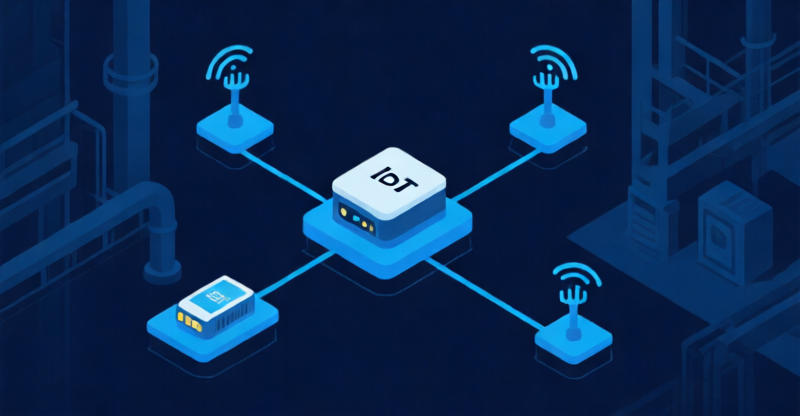
30 Stockwerke, 3 Domanen. IoT monitoriert, BMS steuert.
Ein Smart Building hat kein einzelnes Netzwerk. Es hat drei: das BMS-Backbone (BACnet/IP uber strukturierte Verkabelung —steuert Kaltemaschinen, Klimagerate und Brandmelder), die Etagen-IoT-Schicht (LoRaWAN-Sensoren fur Belegung, CO2, Temperatur —batteriebetrieben, keine Verkabelung) und die zellulare Durchdringungsschicht (NB-IoT fur Wasserzahler in Untergeschossen).
Das Drei-Schichten-Konnektivitatsmodell
BMS-Backbone: BACnet/IP, Modbus TCP —Kaltemaschinen, AHUs, Brandmelder —netzbetrieben —keine IoT-Kosten. Etagen-IoT: LoRaWAN —Belegung, CO2, Temperatur —5-10 Jahre Batterie —lizenzfrei. Zellulare Durchdringung: NB-IoT/LTE-M —Wasser-/Gaszahler im Keller, HVAC auf dem Dach —5-15 Jahre Batterie —EUR 0,10-0,50/SIM/Monat.
Häufig gestellte Fragen
Does my building need IoT if it already has a BMS?
The BMS controls. IoT monitors. They serve different functions. The BMS runs the chiller setpoints and air handler schedules —it does not tell you that Meeting Room 14B is occupied by 8 people producing 800W of metabolic heat while the VAV is set to "unoccupied." IoT adds the occupancy, air quality, and per-zone energy data that makes the BMS smarter. The BMS is not replaced —it is fed better data.
NB-IoT or LoRaWAN for basement water meters in a smart building?
NB-IoT. A LoRaWAN gateway 15 floors up cannot reliably reach a meter behind 3 floors of reinforced concrete. NB-IoT at 164 dB MCL penetrates. One SIM per meter at EUR 0.10-0.50/month — no gateway, no wiring. The alternative (running BACnet cable) costs EUR 500-2,000 per meter in labor.