Intermodal Container Tracking with eSIM + CMP APIs: $85K–160K Hardware for 1,000 Containers, Payback <12 Mo
· 7 min read · Technical Whitepapers
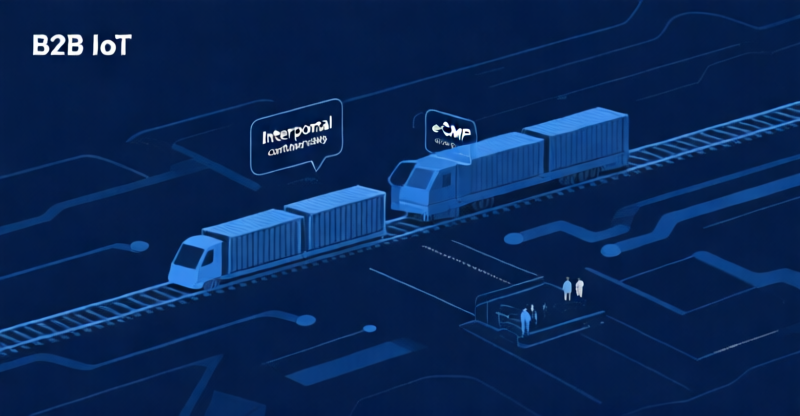
1,000-container eSIM tracking: $85–160K hardware, €60–96K annual connectivity. GSMA SGP.32 cuts carrier onboarding from weeks to minutes.
What is intermodal container tracking? It is the use of eSIM-equipped cellular IoT devices and CMP APIs to maintain continuous position and condition telemetry across rail-port-road handoffs. For a 1,000-container fleet deployment, hardware typically runs $85,000-160,000 and annual connectivity $60,000-96,000, with payback under 12 months when cargo loss rates exceed 0.3% per year.
WHY IT MATTERS
Before eSIM and CMP APIs, a container crossing a border required either a physical SIM swap or a multi-IMSI SIM with pre-negotiated roaming agreements. Physical SIM swaps are operationally impossible for sealed containers, and multi-IMSI roaming termination fees run $0.05-0.15 per MB outside the home network. GSMA SGP.32 v1.0 defines an IoT-specific eUICC architecture that allows remote profile provisioning over IP, cutting profile-switch time from days to under 10 minutes.
With CMP APIs, connectivity procurement shifts from per-country carrier negotiations to a single global contract with per-device profile activation. The eUICC specification separates the SIM profile from the physical silicon, meaning one hardware SKU can be globally procured and activated on any carrier the CMP supports. For a 1,000-device fleet, this shrinks procurement from 5-7 carrier contracts averaging 3-4 weeks each to one CMP contract plus activations measured in minutes.
TYPICAL APPLICATIONS
Rail-Port Handoff Tracking
Rail-yard handoffs are the highest risk for GPS dead zones and cellular coverage drops. European rail corridors show 80-95% LTE-M/NB-IoT coverage per GSMA's public coverage maps, but trans-Siberian routes fall to 40-60%, requiring profiles from at least two carriers per corridor country. An eSIM with dual carrier profiles per country plus a CMP API that triggers profile switching on cell-tower change costs €0.50-2 per device per month in platform fees.
Port-to-Road Exit Tracking
Dwell time in port security zones is a measured cost. Port terminal tariff sheets at Rotterdam and Hamburg list €3-5 per TEU per hour for dwelling containers. Automated profile switching via CMP APIs eliminates manual carrier registration, reducing truck turnaround by 2-4 hours per TEU at those terminals.
Cold Chain Condition Monitoring
Reefer containers require temperature and humidity telemetry at 5-15 minute intervals. A typical LTE-M tracker with three sensors generates 15-30 MB per month. NB-IoT plans at €1.50-4 per month cover this at 40% lower connectivity cost than LTE-M, but must still support eSIM profile switching because a Europe-Asia rail route crosses 3-6 countries.
TECHNICAL SPECIFICATION / COMPARISON TABLE
| Dimension | LTE-M (Cat-M1) | NB-IoT (Cat-NB1) | 5G IoT (Rel-17) | Procurement Impact |
|---|---|---|---|---|
| Peak downlink rate | 1 Mbps (3GPP Rel-14) | 127 kbps (3GPP Rel-14) | 4 Mbps (3GPP Rel-17) | Higher rates enable OTA firmware updates without container retrieval |
| Coverage gain vs GSM | 15-20 dB (3GPP TS 36.101) | 20-30 dB (3GPP TS 36.101) | 30+ dB (3GPP TS 36.101) | Determines rail-tunnel and port-shed handoff reliability |
| Module cost (1K qty) | $12-25 per unit | $6-15 per unit | $25-45 per unit | NB-IoT cuts hardware BOM by 40-60% |
| EU monthly data plan | €2.50-6.00 | €1.50-4.00 | €5.00-12.00 | NB-IoT connectivity TCO is ~40% lower |
| Handoff latency | 200-500 ms | 500-2,000 ms | 80-200 ms | Rail handoffs need sub-300 ms to avoid position data gaps |
| Typical use | Position + OTA updates | Position-only telemetry | Position + video/sensor data | Match capability to cargo value tier |
SELECTION NOTES
When the container route stays within 1-2 countries and a single carrier shows ≥90% coverage on official coverage maps, catalog pricing is sufficient. A single-carrier LTE-M plan at €2.50-6 per device per month covers the requirement, and the eSIM profile can be activated through a CMP API at no extra platform fee. This scenario fits domestic China, US East Coast, or Benelux rail corridors.
When Catalog Pricing Is Sufficient
Catalog is enough when: routes are within 2 countries, a single carrier covers ≥90% of the corridor, data usage stays below 20 MB per device per day, and the device count is under 500 units. Published catalog rates from IoT connectivity partners typically land at €1.50-4 per month for NB-IoT and €2.50-6 for LTE-M.
When a Project Quote Is Required
A project quote is required when routes cross 3+ countries, cargo value per container exceeds $50,000, the CMP API must integrate with an existing TMS or WMS via RESTful endpoints, or the contract demands SLA-backed uptime above 95% on profile switching. Project quotes typically come in 15-30% below catalog per-device pricing but require a 2-3 week quote cycle and 3-4 weeks of procurement review.
COST MODEL / TCO
Hardware Breakdown
eSIM-capable LTE-M tracker with solar assist and temperature input: $89-129 per unit at 1,000 quantity. NB-IoT-only tracker: $55-85. 5G/4G fallback tracker: $140-180. Add $5-15 for antenna and mounting kit. At 1,000 units, hardware ranges from $55,000-180,000 depending on band choices and sensor payload.
Connectivity Cost
Catalog NB-IoT plans run €1.50-4 per device per month; LTE-M €2.50-6. Project quotes for 1,000+ devices with multi-carrier eSIM profiles: €2-3 per device per month in the EU, €3-5 in North America, €5-8 for global coverage, based on published partner rate cards. This all-inclusive rate typically bundles the CMP platform.
CMP Platform + API
CMP platform fees add €0.50-2 per device per month. API integration runs 5-15 engineering days at €800-1,200 per day. For 1,000 devices over 36 months, that is €18,000-72,000 in platform fees plus €4,000-18,000 integration. Project quotes often bundle API integration at zero additional cost.
Installation + Maintenance
Door-mounting on containers costs $15-25 per unit labor. Battery checks every 6-12 months add $8-15 per visit. Annual maintenance typically runs 3-5% of hardware cost. For 1,000 units, installation is $15,000-25,000 and maintenance $2,000-9,000 per year.
Payback Calculation
Industry incident data from TAPA EMEA shows average cargo theft incident values commonly range $1,500-3,000 per single-container event. At 0.5% annual loss rate for 1,000 containers, losses are $7,500-15,000 per year. A $100,000 deployment breaks even in under 12 months when the loss rate exceeds 5% or when dwell-time reductions of 2-4 hours per TEU at €3-5 per TEU-hour terminal charges are monetized.
PROCUREMENT REALITY CHECK
Deployment scenario: a European freight forwarder with 1,200 containers moving Rotterdam-Duisburg-Milan weekly. Hardware: 1,200 × $95 (LTE-M tracker) = $114,000. Connectivity: 1,200 × €5/month = €72,000/year. CMP platform: 1,200 × €1.50/month = €21,600/year. Installation: 1,200 × $18 = $21,600. First-year total: approximately $229,200.
Vendor Selection Logic
The procurement team benchmarked four vendors. Two offered catalog pricing only; one submitted a project quote at 22% below catalog connectivity and bundled the CMP API for 24 months; one required a 3-year commitment with hardware included. The project-quote vendor won because API integration cost (€18,000) was offset by connectivity volume discounts, bringing first-year TCO to $187,400. Rollout took 11 weeks from PO to full deployment, including 5 weeks of parallel carrier profile certifications.
From the Field
Procurement managers note that eSIM profile certification is the timeline bottleneck, not hardware. Deployment teams report that GSMA SGP.32-compliant profile certification takes 3-5 weeks per carrier, so a 4-carrier rollout requires 6-8 weeks of parallel work. Device provisioning via the CMP API runs at 30-40 units per minute once profiles are loaded.
CATALOG PRICING VS PROJECT QUOTE
Catalog pricing is enough when: single-country routes, one carrier with ≥90% coverage, fewer than 500 devices, and data usage below 20 MB per device per day. At this scale, catalog NB-IoT at €1.50-4 per month per device is cost-effective and requires no integration work.
A project quote is required when: multi-country routes need 3+ carrier profiles, cargo value exceeds $50,000 per container, TMS/WMS API integration is needed, or uptime SLAs must stay above 95%. Project quotes typically save 15-30% on connectivity and include API credits, but require a 2-3 week quote cycle and 3-4 week procurement review. For intermodal container tracking crossing rail-port-road handoffs, the project quote is the realistic baseline.
eSIM Container Tracker Specifications (1,000-unit deployment)
| Param | Value | Business Impact |
|---|---|---|
| Hardware cost | $55-180 per device | 40-60% spread between NB-IoT and 5G tiers |
| EU monthly connectivity | €1.50-6 per device | NB-IoT lowers TCO by ~40% vs LTE-M |
| Profile-switch latency | <10 minutes via SGP.32 | Same-day cross-border activation possible |
| CMP platform fee | €0.50-2 per device/month | Adds 10-15% to connectivity TCO |
| Battery life (solar assist) | 3-5 years typical | Reduces maintenance visits by ~60% |
eSIM vs Multi-IMSI vs Physical SIM for Container Tracking
| Dimension | Physical SIM | Multi-IMSI | eSIM (SGP.32) | When to Choose |
|---|---|---|---|---|
| Profile switching | Manual swap | Pre-loaded only | Remote over IP | eSIM for sealed containers |
| Carrier onboarding | 2-4 weeks | 1-2 weeks | 3-5 days | eSIM for multi-country rail |
| Hardware cost | $0.50-2 | $1-3 | $2-5 | Physical SIM for 1-country fleets |
| Roaming avoidance | None | Partial | Full | eSIM for 3+ country routes |
| API/SLA support | None | Limited | Full via CMP | eSIM for TMS/WMS integration |
Frequently Asked Questions
What does eSIM-enabled container tracking cost per device per year?
Connectivity runs $17-72 per device per year at €1.50-6/month depending on NB-IoT vs LTE-M. CMP fees add $6-24 per device per year. Hardware is $55-180 per device at 1,000 quantity, plus $15-25 installation per unit.
How long does CMP API integration take for container tracking?
Typically 5-15 engineering days per integration including RESTful API mapping to TMS/WMS endpoints. Carrier profile certification runs in parallel, adding 3-5 weeks per carrier for GSMA SGP.32 profile approval.
When should I choose catalog pricing vs a project quote for IoT connectivity?
Catalog pricing fits routes within 2 countries, under 500 devices, and single-carrier coverage above 90%. Project quotes are required for 3+ country routes, cargo value above $50,000 per container, or TMS/WMS API integration needs.
How does GSMA SGP.32 change intermodal container tracking procurement?
SGP.32 defines remote eSIM provisioning for IoT over IP, eliminating physical SIM access. This cuts carrier onboarding from 2-3 weeks per country to 3-5 days per profile, and lets one hardware SKU serve global routes.