Catalog vs project IoT SIM pricing: $2 SIM + $14 lifetime flat for outdoor broadcast
September 26, 2026 · 8 min read · Procurement & Strategy
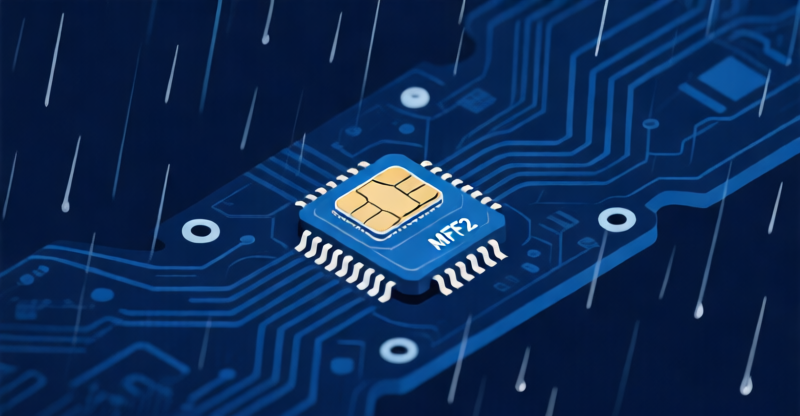
Outdoor broadcast IoT SIM procurement: compare $2 industrial SIM and $14 lifetime flat catalog rates against project quotes driven by fixed field ops.
Catalog vs project IoT SIM pricing is the choice between buying published, per-unit IoT SIM and data plans or negotiating a project quote tied to deployment volume, fixed field operations, and service terms. For outdoor broadcast, 1NCE lists a $2 industrial SIM and a $14 lifetime flat plan [2], while MFF2 soldered SIMs cost about $2.50 versus $2.00 for removable [1]. The switch trigger is fixed operational cost, not the SIM unit price [6].
WHY IT MATTERS
Outdoor broadcast hardware lives at the edge of carrier coverage and environmental limits. Industrial IoT SIMs are rated for -40°C to 105°C and handle vibration, humidity, dust, salt, and chemicals [1][4]. That boundary matters because a standard plastic SIM may fail exactly where broadcast equipment is mounted: tower, stadium roof, or temporary event rig [4]. Before eSIM and remote provisioning, replacing a SIM meant a truck roll; now eSIM can switch to local subscriptions over the air [5].
The procurement constraint has moved from unit price to fixed operational cost. Source [6] notes eSIM cuts upfront cost and eliminates SIM logistics: no inventory bins, no mis-shipped cards, no field swaps, and it matters once deployments grow past a few hundred devices. The same source reports LTE Cat.1 bis now accounts for 63% of total cellular IoT module shipments [6]. Catalog rates remain visible: $1 for a business 3-in-1 SIM, $2 for an industrial card or chip, and $14 for a lifetime flat plan [2]. Those numbers make catalog pricing easy to compare; they do not price the fixed field operations that trigger a project quote [6].
From the field: Procurement managers note that this fixed operational cost, not the SIM unit price, determines when to switch from catalog to project quote [6]. In outdoor broadcast, that means the $1–$2 SIM format differential [2] is not the decision; the decision is whether field swaps, inventory, and carrier transitions are material. The cited rate cards do not publish those fixed costs, so they must be modeled in the quote.
TYPICAL APPLICATIONS
Remote Live Production and Mobile Broadcast Units
Remote production units often cross borders and need industrial SIMs rated for -40°C to 105°C [1][4]. A global IoT SIM with multi-carrier coverage can start on catalog PAYG during testing, then move to pooled or prepaid pricing once usage is understood [1]. If the unit uses embedded MFF2, the catalog hardware premium is about $0.50 per SIM ($2.50 vs $2.00) and eliminates replacement costs and downtime [1].
Fixed Outdoor Broadcast Cameras and Sensors
For fixed outdoor cameras, eSIM and eUICC remote provisioning reduce the need for physical SIM swaps [2][5]. A CMP platform with RESTful M2M API access is typically needed to manage activations and profile changes across a broadcast estate, but the cited catalog pages do not price that platform layer [2]; that is a project quote item. Industrial SIM lifespan around 10 years versus 3 years for consumer SIMs [3] supports embedding the SIM in the camera enclosure.
Temporary Events and Cross-Border Sports Coverage
Temporary events and cross-border sports coverage create permanent roaming and local-compliance questions. Source [4] says IoT SIMs are designed for permanent roaming without restrictions, and source [5] describes eSIM switching to local subscriptions over the air to avoid truck rolls. For a multi-country IoT SIM deployment guide, catalog pricing can cover the pilot; a project quote is needed when the deployment crosses the few-hundred-device threshold where eSIM logistics matter [6].
TECHNICAL SPECIFICATION / COMPARISON TABLE
| Procurement dimension | Catalog IoT SIM pricing | Project IoT SIM quote | Outdoor broadcast trigger |
|---|---|---|---|
| --- | --- | --- | --- |
| Unit SIM cost | $1 business 3-in-1; $2 industrial card/chip [2] | $2.50 MFF2 vs $2.00 removable [1] | Quote when MFF2 avoids 1 field intervention |
| Connectivity plan | $14 lifetime flat [2] | Pooled or prepaid after usage patterns are known [1] | Quote when more than 1 broadcast unit must share a pool |
| Operating temperature | -40°C to 105°C industrial rating [1][4] | Same -40°C to 105°C rating must be confirmed per SKU [1][4] | Quote when outdoor enclosure exposes SIM to vibration, humidity, dust, salt, or chemicals [4] |
| Expected lifespan | Around 10 years for IoT SIM vs 3 years consumer [3] | Quote must state lifecycle and replacement terms [3] | Quote when device cannot be replaced for 10 years [3] |
| Remote provisioning | eUICC available on 3-in-1 formats [2] | eSIM local subscription switching and profile management [5][6] | Quote for cross-border broadcast or network sunset risk [5][6] |
| Logistics scale | Self-serve catalog ordering [2] | eSIM logistics matter past a few hundred devices [6] | Quote at more than a few hundred devices [6] |
SELECTION NOTES
When the deployment is in test or early PAYG, choose catalog pricing. Source [1] recommends starting with a testing plan, moving to PAYG during initial deployment, then switching to pooled or prepaid once usage patterns are understood. When the outdoor broadcast estate crosses a few hundred devices, choose a project quote: source [6] says eSIM logistics matter at that scale, and fixed operational cost—not SIM unit price—determines the catalog-to-quote switch.
When the device can use a removable industrial SIM and no cross-border roaming occurs, catalog pricing is sufficient if the published $2 industrial card or chip rate [2] covers the required -40°C to 105°C rating [4]. When the device requires embedded MFF2 because field replacement is impractical, go to project quote: the $2.50 MFF2 vs $2.00 removable premium [1] is small, but the quote must cover installation, profile management, and carrier switching [5][6].
When multi-country operation, permanent roaming, or network sunset protection is required, choose a project quote with eSIM and CMP/API management. Source [4] says IoT SIMs handle permanent roaming without restrictions, and source [5] says eSIM can switch to local subscriptions over the air. Catalog pricing does not price those workflows for 2 or more countries [2].
COST MODEL / TCO
Hardware
Published catalog hardware: $1 for a business 3-in-1 SIM and $2 for an industrial card or chip [2]. Embedded MFF2 costs about $2.50 versus $2.00 for removable [1], a $0.50 per-device premium.
Connectivity
1NCE lists a $14 lifetime flat plan [2]. Source [1] describes PAYG, pooled, and prepaid transitions, but per-GB or pooled rates are not in the cited catalog page; those require a project quote.
Platform, API, and Installation
The cited sources do not publish CMP platform or RESTful M2M API rates [2]. For outdoor broadcast, include SIM provisioning workflow, eSIM profile management, and installation labor in the project quote. Source [6] notes eSIM eliminates inventory bins, mis-shipped cards, and field swaps—fixed logistics that do not appear in a $2 SIM line item.
Maintenance and Payback
Consumer SIM lifespan is around 3 years; IoT SIM lifespan is around 10 years [3]. The $0.50 MFF2 premium [1] is recovered if it avoids one field intervention, but the cited sources do not publish a truck-roll price; that is a quote-only input. Payback is so driven by fixed operational cost, not by the SIM unit price [6].
PROCUREMENT REALITY CHECK
Procurement managers note that this fixed operational cost, not the SIM unit price, determines when to switch from catalog to project quote [6]. A per-device catalog model using published rates is $2 for an industrial SIM plus $14 lifetime flat, or $16 before platform and installation [2]. A project quote must add MFF2 at $2.50 vs $2.00 removable [1], plus field swaps, inventory, multi-country logistics, and carrier transitions [5][6]. Timeline and truck-roll costs are not published in the cited rate cards; they must be specified in the quote. If those fixed items are immaterial, stay catalog; if material, go to quote.
From the Field
From the field: Procurement managers note that this fixed operational cost, not the SIM unit price, determines when to switch from catalog to project quote [6]. For outdoor broadcast, that means the $1–$2 SIM format differential [2] is not the decision; the decision is whether field swaps, inventory, and carrier transitions are material. The cited rate cards do not publish those fixed costs, so they belong in the quote.
CATALOG VS PROJECT QUOTE: WHEN IS CATALOG PRICING ENOUGH?
Catalog pricing is enough when the outdoor broadcast deployment is in testing or early PAYG, uses a single-country footprint, and can tolerate removable industrial SIMs. The published rate card gives $1 for a business 3-in-1 SIM, $2 for an industrial card or chip, and $14 for a lifetime flat plan [2]. Source [1] recommends starting with a testing plan and PAYG before moving to pooled or prepaid options.
Project quote is required when the deployment exceeds a few hundred devices [6], requires embedded MFF2 because field replacement is impractical [1], needs multi-country eSIM local switching [5], or must manage permanent roaming without restrictions [4]. At that point, the fixed operational cost—not the $2 SIM unit price—determines the switch [6]. CMP platform and RESTful M2M API access are quote items because the cited catalog pages do not price them [2].
References
- Understanding IoT SIM Pricing: Factors, Costs, and Value - Trafalgar Wireless
- 1NCE IoT SIM Plan & Pricing | 1NCE
- Complete Guide to IoT SIM Cards: Types, Form Factors & Connectivity
- IoT SIM Cards Explained: How to Choose the Right M2M SIM for Your Business
- Best IoT SIM for Large Scale Deployment
- IoT Connectivity Costs in 2026: 6 Ways to Cut Telecom Spend - Spenza
- Understanding IoT SIM Pricing: Factors, Costs, and Value - Trafalgar Wireless
- IoT SIM Data Plan Pricing: Understanding Costs for Global Connectivity