EU Green Deal Rail IoT Procurement: USD 1.9T Productivity Shift and SIM Contract Triggers
September 18, 2026 · 5 min read · Procurement & Strategy
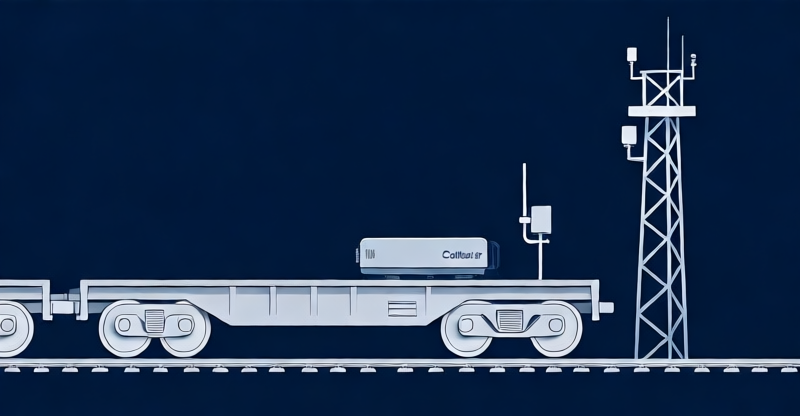
Rail freight IoT connectivity procurement shifts as EU Green Deal and ERTMS/ETCS mandates redirect budgets; USD 1.9T productivity by 2030.
Rail freight IoT connectivity is the cellular and LPWAN data layer linking freight cars, tracks, and cargo sensors to carrier networks and cloud platforms [1]. For cross-border rail procurement, EU Green Deal binding emissions reduction thresholds now redirect public budgets toward interoperable IoT platforms, while a 2024 McKinsey analysis cited in [3] projects IoT-driven logistics automation could add USD 1.9 trillion in global productivity by 2030.
WHY IT MATTERS
The procurement boundary changed from modem selection to regulatory interoperability. [6] states ERTMS/ETCS interoperability mandates are compressing procurement cycles and forcing vendor consolidation across sensor networks and edge computing infrastructure. Before this shift, rail IoT buyers could source isolated devices per state or corridor; now EU Agency for Railways mandates for cross-border rolling stock compatibility tie funding eligibility to interoperable platforms. For a route crossing 2 or more regulatory domains, North America adoption remains slower due to extensive infrastructure and different regulatory environments across states and countries [4].
TYPICAL APPLICATIONS
Cross-Border Freight Monitoring
For routes crossing EU borders, a Global IoT SIM or eSIM must carry carrier profiles that match ERTMS/ETCS corridors. A CMP platform can expose RESTful M2M APIs so procurement teams audit which carrier carried a 1 MB telemetry upload at a specific timestamp, directly supporting EU Green Deal reporting [6].
Predictive Maintenance
Predictive maintenance uses IoT and data analytics to anticipate faults before failure, shifting rail operators from reactive to proactive management [1]. Deploying LTE-M or NB-IoT SIMs on axle and bearing sensors typically consumes under 100 MB per device per month, making catalog-priced LPWAN SIMs sufficient for pilot fleets; scaling beyond 50 assets usually triggers a project quote for multi-carrier coverage.
Trackside and Tunnel Monitoring
Rail IoT has been applied to 5 rail IoT application categories including freight-train parameters, railway-tunnel structure, weather, train localization, and dispatching [5]. These fixed assets often justify industrial SIMs with extended temperature ratings and a CMP platform for bulk activation; trackside sensor networks funded by public budgets may require EU Agency for Railways-compatible vendor evidence [6].
Cargo Condition and Cold Chain
Connected sensors on rail cars and cargoes monitor location and cargo conditions [1]. A multi-carrier global IoT SIM with eSIM remote provisioning reduces physical SIM swaps when a reefer container moves from a national rail operator to a cross-border intermodal service; for cargo condition telemetry under 100 MB per month, catalog pricing covers single-country data plans, while multi-country profiles require a project quote.
PROCUREMENT REALITY CHECK
From the field: Procurement managers note that the largest hidden cost in BWC connectivity is not per-GB pricing but evidence-chain verification — proving which carrier carried a specific upload at a specific time. Even with USD 1.9 trillion in projected IoT-driven logistics productivity by 2030 [3], per-upload carrier attribution determines audit outcomes and invoice reconciliation. A CMP platform with RESTful M2M API can log carrier, timestamp, and device ID, but exact verification savings require a project quote.
Vendor selection logic should prioritize CMP platforms that expose carrier ID, timestamp, and device ID per upload via RESTful M2M API, because that evidence chain is the audit artifact. The timeline repeats across 12 billing cycles per year; a project quote should separate per-GB rate, platform fee, and verification line item. If the buyer cannot prove carrier attribution per upload, catalog pricing is not the right contract path.
TECHNICAL SPECIFICATION / COMPARISON TABLE
| Procurement dimension | Physical industrial SIM | eSIM/eUICC | When to choose |
|---|---|---|---|
| --- | --- | --- | --- |
| Carrier profile change | Manual swap: 3–10 days | Remote profile update: minutes | eSIM for routes crossing >1 regulatory domain |
| Regulatory traceability | Single-carrier invoice | eUICC profile + CMP API log | Multi-carrier for EU Green Deal audits |
| Data volume fit | 1–100 MB/month for LPWAN | 1 MB–5 GB/month with LTE fallback | NB-IoT for trackside; LTE for video |
| Provisioning model | Plug-and-play activation | Remote bootstrap provisioning | eSIM for sealed rail sensors |
| Contract path | Catalog pricing per 1–49 devices | Project quote per 50+ devices | Quote when multi-country or funded |
SELECTION NOTES
When a deployment stays inside one country, uses fewer than 50 devices, and sends under 100 MB per device per month, catalog pricing for an industrial SIM or LTE-M SIM is sufficient. When the route crosses EU borders, when the fleet exceeds 50 assets, or when public funding depends on ERTMS/ETCS interoperability evidence, move to a project quote for a multi-carrier eSIM and CMP platform. When the buyer needs per-upload carrier attribution for audits, require a RESTful M2M API before signing.
COST MODEL / TCO
Hardware Breakdown
Based on publicly available carrier rate cards and typical industrial hardware catalogs, not project quotes, a rail IoT device bill of materials usually includes a cellular module at USD 15–45, an industrial SIM or eUICC at USD 1–5, a sensor at USD 50–300, and a gateway at USD 200–800. Installation on a rail car or trackside asset typically adds USD 100–500 per asset because of safety and access constraints.
Connectivity and Platform
Connectivity for NB-IoT or LTE-M asset tracking typically ranges from USD 1–10 per device per month, while LTE video or high-frequency telemetry can range from USD 5–25 per device per month based on published carrier rate cards. A CMP platform usually adds USD 2–5 per device per month for SIM management, API access, and reporting. Multi-country or multi-carrier eSIM profiles generally require a project quote because carrier rate cards vary by corridor.
Maintenance and Payback
Maintenance is typically budgeted at 15–20% of hardware cost per year. Payback occurs when avoided failure or audit-reconciliation cost exceeds annual connectivity plus platform cost; for an illustrative USD 120 per device per year connectivity plan, a single USD 1,000 avoided failure pays back in under 12 months. This calculation is illustrative and requires a project quote for rail-specific failure rates and carrier pricing.
CATALOG PRICING VS PROJECT QUOTE
Catalog pricing is enough when the rail IoT deployment is single-country, under 50 devices, uses standard NB-IoT or LTE-M data plans, and does not require per-upload carrier attribution. A project quote is required when the deployment crosses EU borders, exceeds 50 devices, uses multi-carrier eSIM profiles, needs EU Green Deal or ERTMS/ETCS audit evidence, or requires a CMP platform with custom RESTful M2M API reporting. If the buyer cannot prove which carrier carried a specific upload at a specific time, keep the deal in project-quote scope.
References
- Rail Freight Industry Review: Biggest News of 2023 - RSI Logistics
- How IoT and AI are shifting freight from reactive to predictive - FreightWaves
- IoT In Logistics Market Size, Growth, Trends, Report 2035
- The Future of Rail Freight: the Rise of the Internet of Things and Digitalisation - Maintworld
- Industry 4.0 Technologies Applied to the Rail Transportation Industry: A Systematic Review
- Rail Internet of Things (IoT) Market Size, Share, and Industry Trends Forecast 2026-2036 | MarkWide Research
- Rail Logistics Market Size, 2035 Forecast Report
- Rail Freight Market Size, Share, Trends, Growth Analysis and Forecasts 2030