Smart Metering IoT SIM in Thailand: 15–20 Year eSIM Decision with NBTC Registration
· 7 min read · Regional Info
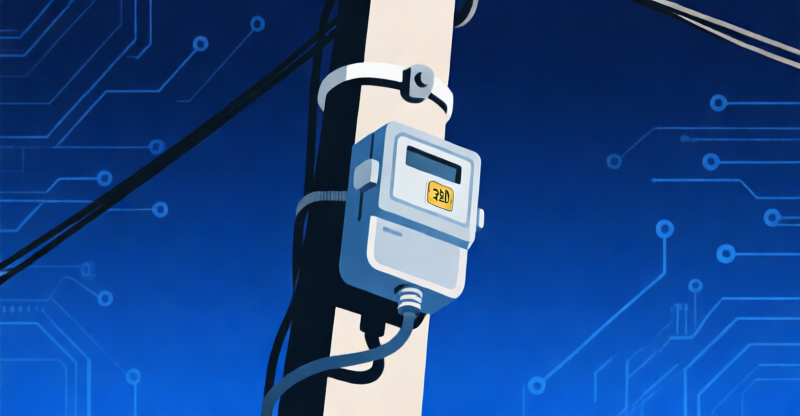
Thailand smart metering IoT SIM buyers must plan for NBTC registration, 15–20 year meter lifespans, and eSIM remote profile switching to avoid carrier lock-in.
An IoT SIM is a SIM profile engineered for machine-to-machine devices; for smart metering in Thailand, the procurement decision is not which plastic card to insert, but how to manage connectivity for a 15–20 year meter lifespan [1]. For a 10,000-meter deployment, the key number is that eUICC-based eSIM profiles can be switched remotely in seconds, eliminating physical SIM swaps that otherwise require opening every sealed meter enclosure [2][8]. Budget for NBTC registration compliance before any device connects [4].
WHY IT MATTERS
Physical SIMs are hard-coded to a single mobile network operator; changing carriers means a physical swap in every device [2]. Thailand's NBTC requires SIM registration for all mobile users [4], and IoT buyers should confirm that their provider registers device SIMs accordingly. Smart meters need connectivity that lasts 15–20 years [1], and eSIMs allow carrier profile updates as infrastructure or regulations change. Without eUICC, a carrier sunset or price change forces a field truck roll to every meter.
Thailand's carrier landscape is multi-operator, and multi-operator IoT SIM cards automatically switch to the strongest available carrier [7]. The procurement constraint is not coverage alone; it is the registration and profile management layer that determines whether a carrier change costs a truck roll or an OTA update [2][8].
From the Field
Deployment teams report that the biggest hidden cost in regulated markets is the 3–8 weeks of engineering time spent reconciling the national telecom registration list with the local carrier's billing system. The same class of risk appears in Thailand: NBTC registration [4] must match the carrier's subscriber database before SIM activation. Procurement should treat that reconciliation as a project task, not a catalog add-on.
TYPICAL APPLICATIONS
Smart Metering (Electricity, Water, Gas)
Smart meters are the reference use case for eSIM in the M2M segment; the 15–20 year device lifespan makes remote profile updates a procurement requirement, not a convenience [1]. For a Thailand deployment, a multi-operator IoT SIM can switch to the strongest available carrier to maintain uptime in industrial estates or provincial grids [7]. This is where a Global IoT SIM with eUICC becomes relevant: the same hardware can carry a Thailand NBTC-registered profile now and a different profile later.
Grid Management and Asset Monitoring
M2M eSIM adoption is dominated by smart metering, asset monitoring, and grid management [1]. These use cases share a control boundary: devices are often underground, inside sealed enclosures, or mounted on poles where physical SIM swaps are impractical [8]. A CMP platform with API access lets the engineering team monitor profile status and data pooling across the fleet without site visits.
Fleet Telematics for Installation Crews
Utilities deploying meters also need connectivity for service vehicles. The same Thailand IoT SIM product path supports asset tracking and fleet management [6]. Procurement can consolidate meter connectivity and vehicle telematics on one CMP platform, using RESTful M2M APIs to automate billing reconciliation and avoid duplicate carrier portals.
Charging Networks and Commercial Devices
eSIM allows charging networks to deploy stations across multiple countries with consistent connectivity management [1]. The Thailand SIM reference explicitly includes gateways, trackers, POS terminals, kiosks, utility meters, and surveillance devices [6]; buyers should match device bands, SIM form factor, monthly traffic model, and physical SIM vs eSIM requirement before selecting a plan [6].
TECHNICAL SPECIFICATION / COMPARISON TABLE
| Dimension | Physical SIM | eUICC eSIM | Procurement impact |
|---|---|---|---|
| Carrier switching | Hard-coded to one operator; physical swap required [2] | OTA profile push in seconds via RSP [2] | No field truck roll for carrier changes |
| Meter lifespan fit | Replaced on carrier sunset | Supports 15–20 year meter lifecycle [1] | Lower TCO over meter life |
| Thailand NBTC registration | Must be registered per SIM; registration tied to physical card [4] | Provider should handle NBTC registration; confirm before purchase [4] | Registration list must match carrier billing database |
| Field logistics | On-site manual replacement in sealed enclosures [8] | Remote provisioning without opening device [8] | Eliminates seal-break and re-permit cost |
| Procurement model | Catalog pricing works for pilot [6] | Project quote when multi-country/CMP management needed [6] | Move to quote before large rollout |
SELECTION NOTES
When the Thailand deployment is a pilot of 200–500 meters on one carrier, a catalog-priced physical IoT SIM can be sufficient; the catalog is a country-specific reference for pilots and test devices [6]. When the rollout exceeds 1,000 meters, involves multiple provinces, or uses devices in sealed enclosures, choose eUICC eSIM so profiles can be switched without site access [2][8].
When the deployment touches more than one country, requires volume delivery, or needs CMP management, move from catalog pricing to a project quote [6]. If the rollout is part of a multi-country program, also check permanent roaming restrictions; some countries require devices to switch to a local carrier profile after a set period [8].
COST MODEL / TCO
Hardware Costs
Based on published component pricing, an eUICC module adds roughly €0.30–€0.80 per unit over a physical SIM slot. For 10,000 meters, that is €3,000–€8,000 of upfront hardware premium. Physical SIM cards themselves are often free with a connectivity contract, but the field swap cost is where the TCO shifts.
Connectivity Costs
Based on published carrier rate cards, an NB-IoT/LTE-M plan for smart metering in Thailand typically runs €0.50–€2.00 per device per month. A 10,000-meter fleet at €1.00 average is €120,000 per year. eSIM does not change the data tariff; it changes how quickly you can move that €120,000 to a different carrier when prices change [2].
Platform and Reconciliation Costs
CMP platform fees are typically €0.05–€0.20 per SIM per month, and RESTful M2M APIs are the standard integration path for pulling registration and usage data. Procurement managers note that the biggest hidden cost in Jordanian deployments is the 3–8 weeks of engineering time spent reconciling the TRC registration list with the local carrier's billing system. In Thailand, budget the same 3–8 weeks for NBTC registration reconciliation if you do not automate it with API-driven checks.
Payback Calculation
Avoiding one physical SIM swap per meter at €10 average labor saves €100,000 on a 10,000-meter program. That covers the eUICC hardware premium (€3,000–€8,000) and several years of CMP fees. If the alternative is a carrier lock-in after a price change, the payback is immediate at any scale above 1,000 meters.
PROCUREMENT REALITY CHECK
A Thailand smart-metering buyer orders 10,000 SIMs for a grid modernization program. The vendor offers catalog pricing at €0.80 per device per month, but the deployment includes sealed meter enclosures and a planned move from one carrier to another when the initial contract expires. Physical SIM would require 10,000 field swaps; eSIM with eUICC allows remote profile switching [2]. The buyer should select the eSIM SKU and request a project quote because the program includes CMP management [6].
The cost scenario: eUICC hardware premium €3,000–€8,000, connectivity €96,000/year at €0.80, CMP fees €6,000–€24,000/year for 10,000 SIMs, and zero truck rolls for carrier change. If a physical SIM is used, add €50,000–€150,000 for field swaps and the 3–8 weeks of engineering time to reconcile NBTC registration with the carrier billing system.
CATALOG PRICING VS PROJECT QUOTE
Catalog pricing is enough when you are buying a small pilot volume, a single-country SIM, a single carrier, and no CMP platform. The Thailand IoT SIM catalog reference is positioned for pilots and single-country pricing comparisons [6].
Project quote is required when the deployment exceeds pilot scale, needs eUICC eSIM profiles, multi-country coverage, CMP visibility, or API-based registration reconciliation. Source [6] lists volume delivery and CMP management as triggers to move from catalog pricing into a project quote. If your meters are sealed and expected to last 15–20 years [1], do not buy catalog cards that cannot be remotely reprovisioned.
Thailand Smart Metering IoT SIM Procurement Parameters
| Parameter | Value | Business Impact |
|---|---|---|
| Meter design life | 15–20 years [1] | eSIM profile updates must be supported over device lifetime [1] |
| Profile switch time | Seconds via OTA RSP [2] | No truck roll for carrier changes |
| NBTC registration | Required for all SIMs [4] | Confirm provider handles compliance before purchase |
| eUICC hardware premium | €0.30–€0.80 per module (published component pricing) | For 10,000 meters: €3,000–€8,000 upfront |
| Connectivity plan | €0.50–€2.00 per device/month (published carrier rate cards) | At €1.00 average: €120,000/year per 10,000 meters |
| CMP platform fee | €0.05–€0.20 per SIM/month | €6,000–€24,000/year for 10,000 SIMs |
Physical SIM vs eUICC eSIM for Thailand Smart Meters
| Dimension | Physical SIM | eUICC eSIM | When to Choose |
|---|---|---|---|
| Carrier changes | Physical swap in every device [2] | OTA profile push in seconds [2] | eSIM when fleet >1,000 or sealed |
| Regulatory compliance | Registration tied to card [4] | Provider can handle NBTC registration [4] | eSIM when multi-country rollout |
| Logistics | Manual on-site replacement [8] | Remote provisioning [8] | eSIM for underground/pole-mounted meters |
| Procurement pricing | Catalog for pilot [6] | Project quote for CMP/volume [6] | Project quote when multi-country |
| Lifespan | Replaced on sunset [1] | 15–20 year support [1] | eSIM for smart metering |
Frequently Asked Questions
Why is Thailand relevant for IoT deployments?
Thailand has a multi-operator mobile market, and NBTC requires SIM registration for all mobile users [4][7]. For smart metering, the country-specific IoT SIM reference supports utility meters and other industrial M2M hardware [6].
What is an IoT SIM?
An IoT SIM is a SIM profile or card designed for machine-to-machine devices. In Thailand sourcing, it can be a physical M2M SIM or an eSIM, and the plan choice depends on device bands, form factor, monthly traffic, and whether the rollout needs CMP management [6].
What is SIM management?
SIM management is the process of auditing devices, tracking carriers and data plans, defining coverage and compliance requirements, and activating SIMs at scale. For global deployments, a CMP platform provides visibility and API-based control [3][6].
Is it possible to unify management across legacy physical SIMs and modern eSIMs?
A CMP platform can centralize billing and status for both, but it cannot make a physical SIM switch carriers remotely. Physical SIMs are hard-coded to one operator; eUICC eSIMs can receive new profiles OTA in seconds [2][6].
When should buyers move from catalog pricing to a project quote?
Catalog pricing works for pilots and single-country comparisons. Move to a project quote when the Thailand rollout involves multiple countries, volume delivery, CMP management, or eSIM evaluation [6].
References
- eSIM for IoT: What decision-makers need to know in 2026
- ESIM vs. Physical SIM for IoT: 2026 Provisioning Guide
- Managing Global IoT SIM Cards in 2026
- Thailand eSIM Guide 2026: Speeds, Island Coverage & eKYC
- eSIM deployments for cellular IoT: A complete guide
- Thailand IoT SIM Card for Business | Best M2M Carrier Path | Quanqiu IoT
- IoT SIM Card Thailand | M2M Connectivity & eSIM
- eSIM IoT: The Smart Connectivity for Global Deployments