Solar Inverter Telemetry eSIM Procurement in the Philippines: Cellular IoT Is 22% of Global Connections—Switch Profiles OTA, Not by Truck Roll
· 6 min read · Regional Info
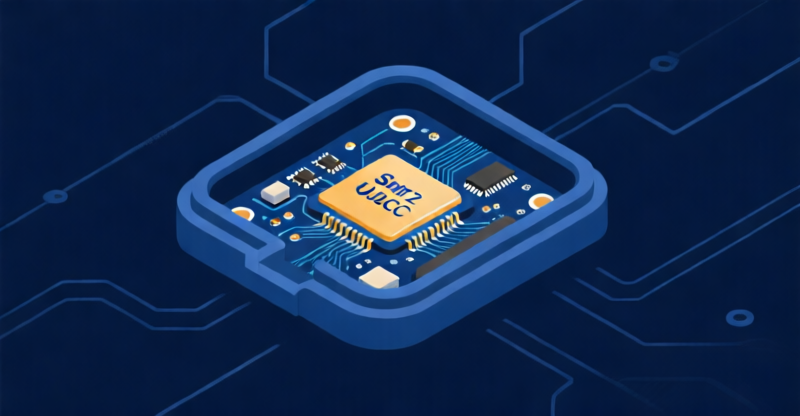
For Philippine solar fleets, eUICC eSIMs cut profile-switch truck rolls. Budget $0.50-$9 per inverter per month; require per-device carrier logs.
Cellular IoT SIM deployment for solar inverter telemetry in the Philippines is the process of embedding a network identity into each inverter and provisioning a data plan for production and fault reporting. Cellular IoT accounts for 22% of all global connections in 2026 [6], and eUICC eSIMs switch carrier profiles over the air [1]. Budget $0.50-$9.00 per inverter per month for connectivity based on published carrier rate cards; the procurement focus is cutting truck rolls, not shaving SIM piece price.
WHY IT MATTERS
Traditional IoT SIM provisioning ties each device to one operator profile and stalls activation in carrier portals [2]. With 1,000 inverters, a profile change means 1,000 physical SIM replacement decisions. The new boundary is regulatory fragmentation: countries that ban permanent roaming require a local carrier replacement after a set period, and a fixed physical SIM cannot meet that rule without a site visit [8].
Instead of one profile per card [3], an eUICC eSIM can download a local profile at the device's final destination [6][8]. The procurement question shifts from “which SIM card has the lowest price” to “which CMP platform can switch profiles, log the switch, and show the active carrier per inverter.” Before volume purchase, audit your current deployment, document the sites and carriers, and ask each provider about its Philippine compliance policy [2][4]. Published carrier rate cards are the price floor, not a regulatory clearance.
TYPICAL APPLICATIONS
Solar inverter telemetry maps to three procurement paths: catalog-buy global IoT SIMs, eUICC eSIM plus CMP, or project-scoped managed connectivity. The deployment shape determines which path is valid.
Application 1: Sealed rooftop C&I solar fleets
An MFF2 eUICC soldered to the inverter board supports compact, sealed designs and lower power consumption [4]. This matters for commercial rooftops where 200-2,000 inverters are mounted without practical field SIM access. Product path: global IoT SIM in MFF2 form factor, catalog pricing if every profile belongs to the same home carrier.
Application 2: Rural micro-grids and remote well-site inverters
Devices in these deployments may sit 10-50 km from the nearest service depot, and the final operating carrier may not be known when the unit is assembled. eUICC lets devices ship without a final destination and download a profile after deployment [4]. Choose a vendor whose profile push is exposed through a RESTful M2M API, not a support ticket.
Application 3: Multi-island and cross-border operations
Multi-site operators often need a local carrier profile in 2-3 destination regions, not indefinite roaming. eUICC remote provisioning lets a device download a local profile when permanent-roaming restrictions apply [6][8]. Buy in this mode: CMP seats, data-pooling volume, and an API integration project, all in a project quote.
TECHNICAL SPECIFICATION / COMPARISON TABLE
The solar telemetry decision is not eSIM versus physical SIM as hardware; it is fixed-profile logistics versus eUICC OTA management.
| Dimension | Physical M2M SIM | eUICC eSIM | Procurement impact |
|---|---|---|---|
| Active operator profiles | 1 profile fixed at manufacturing [3] | Multiple profiles; remote download and switching [3] | Fixed-profile SIM ties you to one carrier contract; eSIM enables carrier switch after shipment [6] |
| Carrier switching | Manual replacement at the site [8] | Over-the-air profile switch without device access [1][3] | No truck roll for profile changes, only for hardware failure |
| Enclosure design | Requires SIM slot access for future swap | MFF2 soldered; compact sealed design [4] | Supports IP-rated inverter cabinets |
| Roaming-ban readiness | Cannot meet local-replacement rules without site visit [8] | Can download local carrier profile at final destination [6] | Determine whether the Philippines has a profile-locality requirement |
| Deployment standard | Manual activation through carrier portals [2] | SGP.32 eUICC is commercial-grade for IoT [3][5] | Add SGP.32 support to the RFP; catalog SIMs may lack it |
SELECTION NOTES
Catalog pricing is enough when all four conditions are true: fewer than 1,000 devices, accessible cabinets, a single-country carrier contract, and no permanent-roaming restriction triggered in the deployment life. A physical M2M SIM with a fixed profile and a few spares may be economical then because the truck-roll risk is low.
Choose eUICC with SGP.32 and request a project quote when any one trigger appears: devices in sealed or underground enclosures, final provinces not known at manufacturing, or carrier contracts likely to be renegotiated within 36 months. In that mode, the procurement unit is not a SIM but a managed identity: CMP log export, RESTful M2M API, data pooling, and a remote profile catalog beyond one carrier.
COST MODEL / TCO
The full TCO has five lines: hardware, connectivity, CMP platform, install, and maintenance. The ranges below come from published carrier rate cards and module distribution price lists; your final quote should show line-item assumptions.
Hardware Costs
For a 1,000-inverter fleet, a plastic M2M SIM is typically $0.20-$1.50 per unit at volume. An eUICC MFF2 adds roughly $1.50-$4.00 per unit at the same volume, based on publicly available module distribution price lists. Total hardware delta: $1,500-$4,000, less than the labor cost of 15-30 avoided site visits.
Connectivity Costs
A solar inverter telemetry profile of 10-30 MB per inverter per month is typical for 15-minute production reporting plus health checks, based on public carrier rate-card calculators. At $0.05-$0.30 per MB from published carrier rate cards, connectivity ranges from $0.50 to $9.00 per inverter per month. For 1,000 inverters at 20 MB and $0.15 per MB, the pooled-data cost is about $3,000 per month.
Platform, Install, and Maintenance
CMP platform fees for IoT eSIM fleets typically run $0.05-$0.15 per SIM per month, based on publicly available platform pricing. Profile activation, regulatory validation, and RESTful API integration are usually quoted as a project: $3,000-$15,000 depending on the number of local profiles and systems to connect. Add these to the TCO; per-MB price alone hides platform scope.
Payback Logic
The eUICC hardware premium is recouped when 2-3% of a 1,000-inverter fleet needs a carrier change during the contract term. Each avoided physical swap is $80-$150 in labor and logistics using typical field-service rates, so 20-30 changes save $1,600-$4,500. The field labor cost of that profile switch falls to $0 when eUICC remote provisioning is enabled; the same switch on a physical SIM is not [1][3].
PROCUREMENT REALITY CHECK
Procurement Reality Check: A Philippine O&M buyer with 1,500 inverters should not sign a catalog order before testing the CMP log export. Deployment teams report that carrier identity logs become the audit trail for cold-chain compliance; the same logs substantiate feed-in tariff uptime and warranty claims on solar assets. Require per-device logs showing active profile, carrier, and profile-switch timestamps. If the provider only quotes pooled traffic, keep the deployment in pilot and move the contract to project quote.
WHEN CATALOG PRICING IS ENOUGH VS PROJECT QUOTE
Catalog pricing is enough when the deployment is smaller than 1,000 devices, the carrier contract is stable for the expected asset life, and the devices are physically accessible for SIM replacement. A project quote is required when eUICC SGP.32, local profile management, or CMP API integration is part of the operational requirement. The quote should name the SGP.32 profile catalog, per-device log export, and local regulatory steps—otherwise the real cost will land in truck rolls later.
IoT SIM hardware and connectivity parameters for solar inverter telemetry
| Parameter | Value | Business Impact |
|---|---|---|
| SIM form factor | Plastic 2FF/3FF or MFF2 embedded [4] | MFF2 allows sealed inverter enclosures |
| Operator profiles | Physical SIM: 1 profile; eUICC eSIM: multiple profiles [3] | eUICC supports local-profile replacement after arrival [6] |
| Profile provisioning | Manual activation [2] vs OTA remote provisioning [1] | Remote provisioning removes truck rolls |
| Roaming rule handling | Physical SIM needs local replacement after set period [8]; eSIM can download local profile [6] | Confirm Philippines-specific profile-locality requirement before quote |
| IoT standard | SGP.32 mature for eUICC IoT in 2026 [3] | Add SGP.32 requirement to RFP |
Catalog vs project-scoped connectivity procurement for solar telemetry
| Dimension | Catalog eSIM | Project eUICC | When to choose |
|---|---|---|---|
| Fleet size | Under 1,000 units | 1,000+ units or multi-site | Multiple sites multiply truck-roll risk |
| Profile switch | Manual replacement with spare SIMs | OTA switch managed by CMP platform [1] | Sealed/remote inverter cabinets |
| Compliance evidence | Carrier-portal pool data | Per-device carrier identity logs | Feed-in tariff, warranty, or compliance audits |
| Commercial | Price per MB from published rate cards | Project quote including SGP.32 and API costs [3] | Local-profile regulatory conditions apply [8] |
Frequently Asked Questions
Is eSIM more secure than a physical SIM for industrial IoT?
An eUICC eSIM cannot be physically removed or swapped, which removes the theft and tamper surface of a removable SIM [3]. A physical SIM also requires manual handling during activation [2]. OTA profile switching reduces site access, but security still depends on the provider's RSP infrastructure and SIM OS [5].
What is the main difference between eSIM and physical SIM provisioning?
A physical M2M SIM is usually fixed to one operator profile and must be activated manually in a carrier portal [2][3]. An eUICC eSIM stores multiple profiles and can download or switch profiles over the air using SGP.32 [1][3]. That means carrier changes do not require a truck roll.
Can I switch carriers remotely with a physical IoT SIM card?
A conventional physical M2M SIM cannot switch home carriers remotely; it requires a physical SIM replacement [8]. Remote network profile switching is an eUICC eSIM capability, not a physical SIM feature [1].
What is a remote network reset, and why does my IoT deployment need it?
A remote network reset is the eUICC process of deleting or replacing a carrier profile over the air [1]. It matters because permanent-roaming bans in several countries require a local carrier profile after a set period; a fixed physical SIM cannot meet that condition without a site visit [8].
Does an eUICC SIM support 5G RedCap for new solar devices?
5G RedCap support is a radio-modem and SIM-OS property, not a promise of eUICC alone. Source [5] states Kigen SIM OS is built for 2G-5G and NB-IoT/LTE-M; confirm the modem module and SIM OS release support RedCap in your project quote.
How do I prevent bill shock in a large-scale IoT deployment?
Use a CMP platform with pooled data and alert-based API controls. Fragmented carrier relationships create roaming surcharges, overage fees, and minimum commitments [1]. For a 1,000-inverter fleet at about 20 MB per month, compare pooled pricing versus per-SIM price before signing.
References
- How to Manage Global IoT SIMs in 2026
- Managing Global IoT SIM Cards in 2026
- eSIM for IoT: The definitive buyer's guide 2026 | M2M Connectivity
- eSIM deployments for cellular IoT: A complete guide
- Best eUICC SIM for IoT Connectivity: Top 5 Options in 2026
- ESIM vs. Physical SIM for IoT: 2026 Provisioning Guide
- eSIM deployments for cellular IoT: A complete guide
- eSIM IoT: The Smart Connectivity for Global Deployments